

First, temperature and humidity sensors
Temperature and humidity sensors compared to other sensors, this is the most familiar to the public sensor. In addition to the industrial sector, they are also widely used in agriculture, chemicals, civil engineering, research and aerospace. Humidity and temperature are important environmental factors that affect many areas of industry. Many high-precision mechanical processes or calibration measurements have high requirements for temperature and humidity, and unsuitable temperatures and humidity can affect the precision performance of products.
The requirements for temperature and humidity sensors in the industrial sector are also generally high, which has led to the birth of industrial grade temperature and humidity sensors. Industrial temperature and humidity sensors are more accurate and controlled than ordinary temperature and humidity sensors. A variety of temperature and humidity transmitters can be combined and connected with other environmental monitoring systems to achieve automated remote monitoring and control.
In addition to transmitters, more temperature and humidity Internet of Things monitoring system to help large factories, machinery processing, warehouses to achieve the whole temperature and humidity data monitoring, automatically upload the cloud platform, with online, storage, statistics, alarm, analysis reports and data remote transmission and other functions.
Second, photoelectric sensor
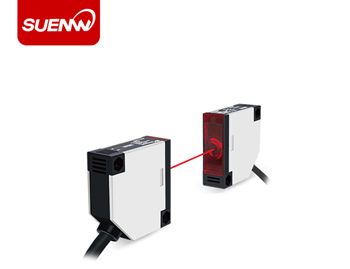
Photoelectric sensor is a device that converts light signals into electrical signals. It can be used to measure light intensity, light illumination, radiation temperature measurement, gas composition analysis, etc.
Third, the pressure sensor
Pressure sensor is in addition to temperature and humidity sensor another commonly used sensor, it can feel the pressure signal, and in accordance with certain laws will be able to convert the pressure signal into the available output of the electrical signal device or device. It is widely used in various mechanical industrial production automation, aerospace, petrochemical, electric power and other industries.
Sensors have long penetrated into industry, agriculture, aerospace, heavy industry, chemical industry, civil engineering, water and electricity, scientific research, electronics and other extremely wide range of fields. Sensors are not only limited to these types, but also such as convergence sensors, position sensors, inductive sensors, vacuum sensors, flow sensors, etc. are widely used in the industrial environment.