

Fiber optic sensors and photoelectric sensors as two typical sensors, the production of measurement in its application are more widespread, so what is the difference between the two?
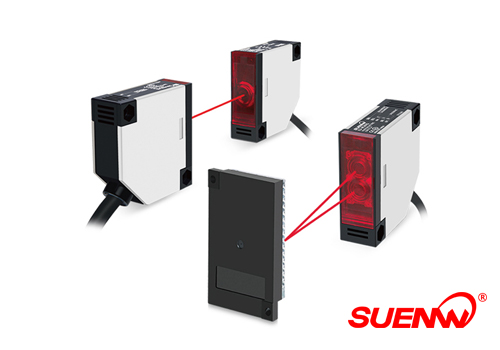
Fiber optic sensor technology is built on the basis of optical fiber, optical communications and optoelectronics technology developed, electromagnetic interference and corrosion effects on it is very small, it can adapt to a variety of harsh weather conditions, without additional power supply for power supply, it can be long-distance transmission, is the current sensor industry research hotspots.
1. Principle
Photoelectric Sensor: It is a sensor that uses a photoelectric element as a detection element. It first converts the measured change into a change in the optical signal, and then further converts the optical signal into an electrical signal with the help of a photoelectric element. Photoelectric sensor is generally composed of three parts: light source, optical path and photoelectric element.
Fiber Optic Sensor: is the light from the light source through the optical fiber into the modulator, so that the parameters to be measured and the light into the modulation area after the interaction, resulting in the optical properties of light (such as light intensity, wavelength, frequency, phase, bias state, etc.) change, known as the modulated signal light, in the optical fiber sent to the optical detector, after demodulation, to obtain the measured parameters.
2. Applications
1). Application areas of photoelectric sensors: Soot turbidity monitor to prevent industrial soot pollution is one of the important tasks of environmental protection. In order to eliminate industrial soot pollution, we must first know the soot emissions, so the soot source must be monitored, automatically displayed and exceeded alarm. The turbidity of the soot in the flue is detected using the size of the change through the light during its transmission in the flue. If the turbidity of the flue increases, the light from the light source is absorbed and refracted by the soot particles, and the light reaching the photodetector decreases, so the strength of the output signal of the photodetector reflects the change of the turbidity of the flue.
Photocells in photoelectric detection and automatic control applications; photocells used as photoelectric detection, the basic principle is the same as the photodiode, but their basic structure and manufacturing process is not exactly the same. As the photoelectric cell work without applied voltage; photoelectric conversion efficiency, wide spectral range, good frequency characteristics, low noise, etc., it has been widely used in photoelectric readout, photoelectric coupling, grating ranging, laser collimation, film also sound, ultraviolet monitor and gas turbine flameout protection devices.
2) Fiber optic sensor application areas: insulator fouling, magnetic, acoustic, pressure, temperature, acceleration, gyroscope, displacement, liquid level, torque, light and sound, current and strain and other physical quantities measurement.