

A photoelectric sensor is a device that converts an optical signal into an electrical signal. Its working principle is based on the photoelectric effect. The photoelectric effect refers to the phenomenon that when light is irradiated on certain substances, the electrons of the substances absorb the energy of photons and the corresponding electrical effects occur.
According to the photoelectric effect of the phenomenon of different photoelectric effect is divided into three categories: external photoelectric effect, internal photoelectric effect and photovoltaic effect. Photovoltaic devices include phototubes, photomultiplier tubes, photoresistors, photodiodes, phototransistors, photocells and so on. The performance and characteristic curves of photoelectric devices are analyzed
Chinese name: photoelectric sensor Components: light source, optical path and photoelectric elementForeign name: photoelectric sensor/micro sensor Purpose: the measured change into the change of optical signal
Subject: Physics Principle: photoelectric effect
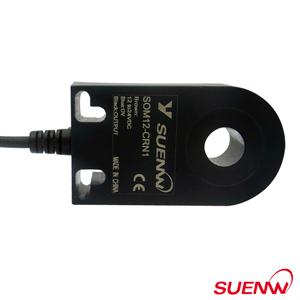
Sensor Overview Editor
Photoelectric sensors are generally composed of 2 parts: the processing path and the processing element. The basic principle is based on the photoelectric effect, the measured changes into changes in the optical signal, and then with the photoelectric element to further convert the non-electrical signal into an electrical signal. Photoelectric effect is to use light to irradiate a certain object, can be seen as a series of photons with a certain energy for the bombardment of the object, then the photon energy is transferred to the electron, and is a photon of all the energy at once by an electron absorbed, the electron gets the photon transfer of energy after its state will change, so that the object irradiated by light to produce the corresponding electrical effect.
Usually the photoelectric effect is divided into three categories:
(1) in the role of light can make the electron overflow object surface phenomenon called external photoelectric effect, such as phototubes, photomultiplier tubes, etc.;
(2) in the role of light can make the object resistivity change phenomenon called internal photoelectric effect, such as photoresistors, phototransistors, etc.;
(3) in the role of light, the object produces a certain direction of electric potential phenomenon called photovoltaic effect, such as photovoltaic cells, etc. such as photocells, etc.
Photoelectric detection method has the advantages of high accuracy, fast response, non-contact, and more parameters can be measured, the structure of the sensor is simple, flexible and diverse forms, therefore, photoelectric sensors in the detection and control is very widely used
Photoelectric sensor is the key element of photoelectric conversion in various photoelectric detection systems, it is the light signal (visible and ultraviolet laser light) into an electrical signal device
The photoelectric sensor is a sensor that uses a photoelectric device as a conversion element. It can be used to detect non-electrical physical quantities that directly cause light changes, such as light intensity, light level, radiation temperature measurement, gas composition analysis, etc.; it can also be used to detect other non-electrical quantities that can be converted into light changes, such as part diameter, surface roughness, strain, displacement, vibration, speed, acceleration, as well as the shape of the object, the identification of the working state, etc. Photoelectric sensors are widely used in industrial automation devices and robots because of their non-contact, fast response and reliable performance. New optoelectronic devices are emerging, especially the birth of CCD image sensors, creating a new page for the further application of optoelectronic sensors.
Photoelectric sensors are used in
1. Photoelectric sensors used in laser weapons
Because the photoelectric sensor to infrared radiation, or visible light, or to both are particularly sensitive, and therefore more likely to become the target of laser attacks. In addition, the electronic system and the sensor itself is also very vulnerable to laser-generated thermal noise and electromagnetic noise interference and can not work properly. Laser weapons on the battlefield to attack optoelectronic sensors in the following ways: the appropriate energy of the laser beam will be the sensor "blind", so that it can not detect or continue to track the target has been detected. Alternatively, if the sensor is guiding a weapon toward a target, blinding will cause it to lose its target. In summary, as sensors play an increasingly important role on the battlefield and are vulnerable to laser attacks, they have become the preferred target for low-energy laser weapons.
2. Photoelectric sensors used in automatic meter reading system
With the development of microelectronics technology, sensor technology, computer technology and modern communication technology, photoelectric sensors can be used to develop automatic meter reading systems. The aluminum disk of the energy meter is driven by the torque generated by the eddy current and magnetic field and rotates. The use of photoelectric sensors can be converted into the number of pulses of the aluminum disk rotation. For example, if the rotating bright aluminum disk is partially painted black, and then equipped with reflective photoelectric transmitting and receiving pair of tubes, when the aluminum disk rotates, pulses will be generated at the partially painted black, and the number of rotations of the aluminum disk can be sampled and converted into the corresponding number of pulses, and sent to the T0 port of CPU for counting by photoelectric coupling isolation circuit. The use of photoelectric coupling isolator can effectively prevent interference signals from entering the microcomputer. Combined with other transmission methods, it can form an automatic meter reading system.
3.Photoelectric sensor applied to monitor smoke pollution
Photoelectric sensor is a small electronic device, it can detect the changes in the light intensity it receives, by converting the changes in light intensity into changes in electrical signals to achieve control functions. Since photoelectric sensors have the characteristics of non-contact, fast response and reliable performance, they are widely used in industrial automation devices and robots, and we can use the characteristics of photoelectric sensors to detect the situation of smoke and dust, so the strength of the output signal of photoelectric sensors can reflect the changes in the turbidity of the flue
4. Sanitary flush-proof photoelectric sensor
The flush-proof sensor provides high reliability and comfort, and minimizes operating costs. Combined with the IO-Link interface and the proTect+ sealing concept for a significantly longer service life, these two new sensors are ideal solutions for the food and beverage industry in demanding applications.